
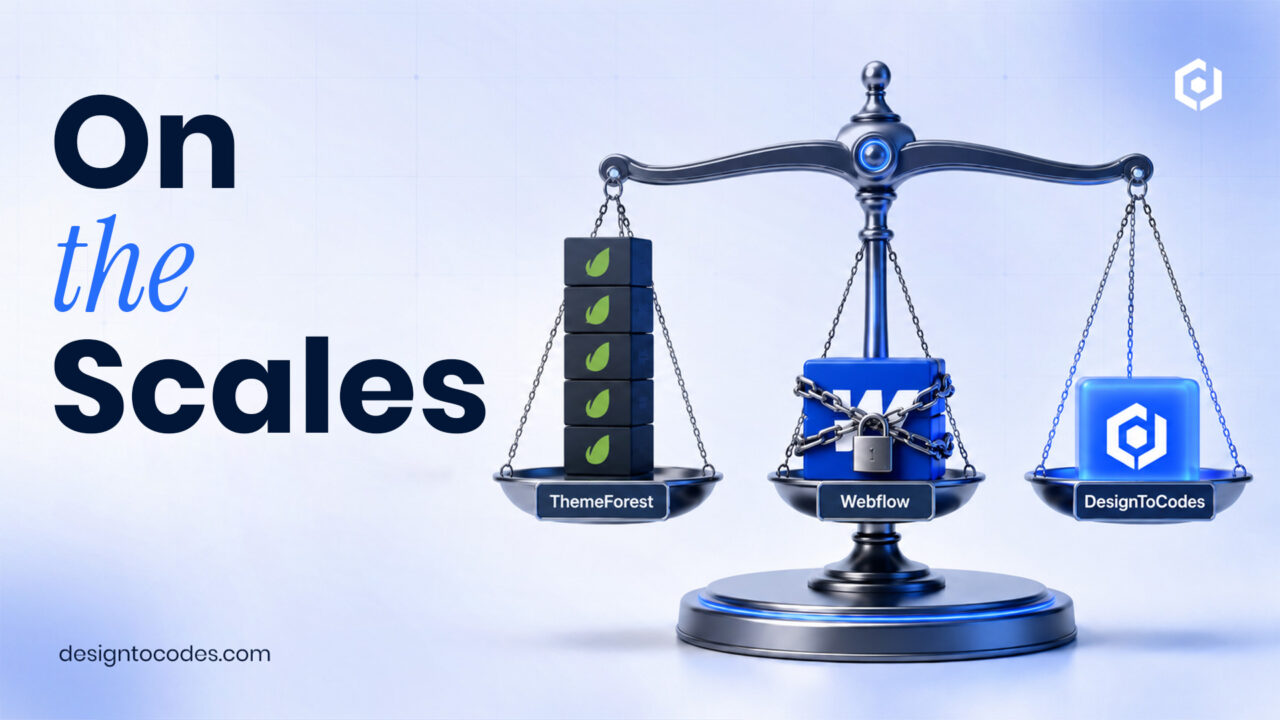
DesignToCodes vs ThemeForest vs Webflow — which template marketplace should you choose?
Choose ThemeForest for the largest selection and lowest entry price, Webflow Templates if you’re committed to the Webflow platform and want visual editing, and DesignToCodes for hand-coded, performance-first templates across multiple frameworks with no platform lock-in. Each is the right answer for a different buyer. This comparison lays out the real trade-offs — including where we’re not the best fit — so you can decide honestly.
Read the full comparison of designtocodes vs themeforest vs webflow.
The three options in one line each
- ThemeForest: a massive marketplace of templates from thousands of independent authors — huge variety, variable quality.
- Webflow Templates: templates that run inside the Webflow visual builder — great editing experience, tied to the Webflow ecosystem and subscription.
- DesignToCodes: a curated catalog of hand-coded templates (Next.js, React, WordPress, Elementor, Bootstrap, Tailwind, HTML) built to a consistent performance and accessibility standard.
Side-by-side designtocodes vs themeforest vs webflow comparison
| Factor | ThemeForest | Webflow Templates | DesignToCodes |
|---|---|---|---|
| Selection | Largest (thousands) | Moderate | Curated, smaller |
| Quality consistency | Varies by author | High (vetted) | High (one bar) |
| Framework support | Wide but uneven | Webflow only | Multi-framework |
| Platform lock-in | None | Yes (Webflow) | None |
| Entry price | Lowest | Mid | Mid, free tier |
| Ongoing cost | One-time | Webflow subscription | One-time |
| Code access | Usually full | Limited (export tiers) | Full source |
| Support | Per-author | Platform + author | Direct from the team |
Pricing over five years (a realistic site)
Sticker price isn’t the total cost. A Webflow template is cheap up front but requires an ongoing Webflow plan to keep the site live, so over five years, the platform subscription dominates the total. A ThemeForest or DesignToCodes template is a one-time purchase — you host it wherever you like. If you already pay for Webflow for other reasons, that math changes; if you don’t, a hand-coded template you own outright is usually cheaper over time.
When each one is genuinely the right pick
Choose ThemeForest if…
You want the widest possible selection, you’re price-sensitive, and you’re comfortable vetting quality yourself (checking the author’s reviews, update history, and demo performance). The variety is unmatched; the trade-off is that quality is the author’s, not the marketplace’s.
Choose Webflow Templates if…
You’ve already chosen Webflow as your platform, and you value the visual editor and hosting being handled for you. The editing experience is excellent. The trade-offs are platform lock-in and the recurring subscription — your site lives inside Webflow.
Choose DesignToCodes if…
You want hand-coded templates that pass Core Web Vitals out of the box, across the framework you actually use (Next.js, React, WordPress, and more), with full source code, no platform lock-in, and one consistent quality standard rather than author roulette. The trade-off is a smaller, curated catalog — we ship fewer templates, deliberately.
Trending templates of DesignToCodes people loved a lot

Axonforge – AI SaaS Next.js Template

Carvatrix – Car Rental Framer Website
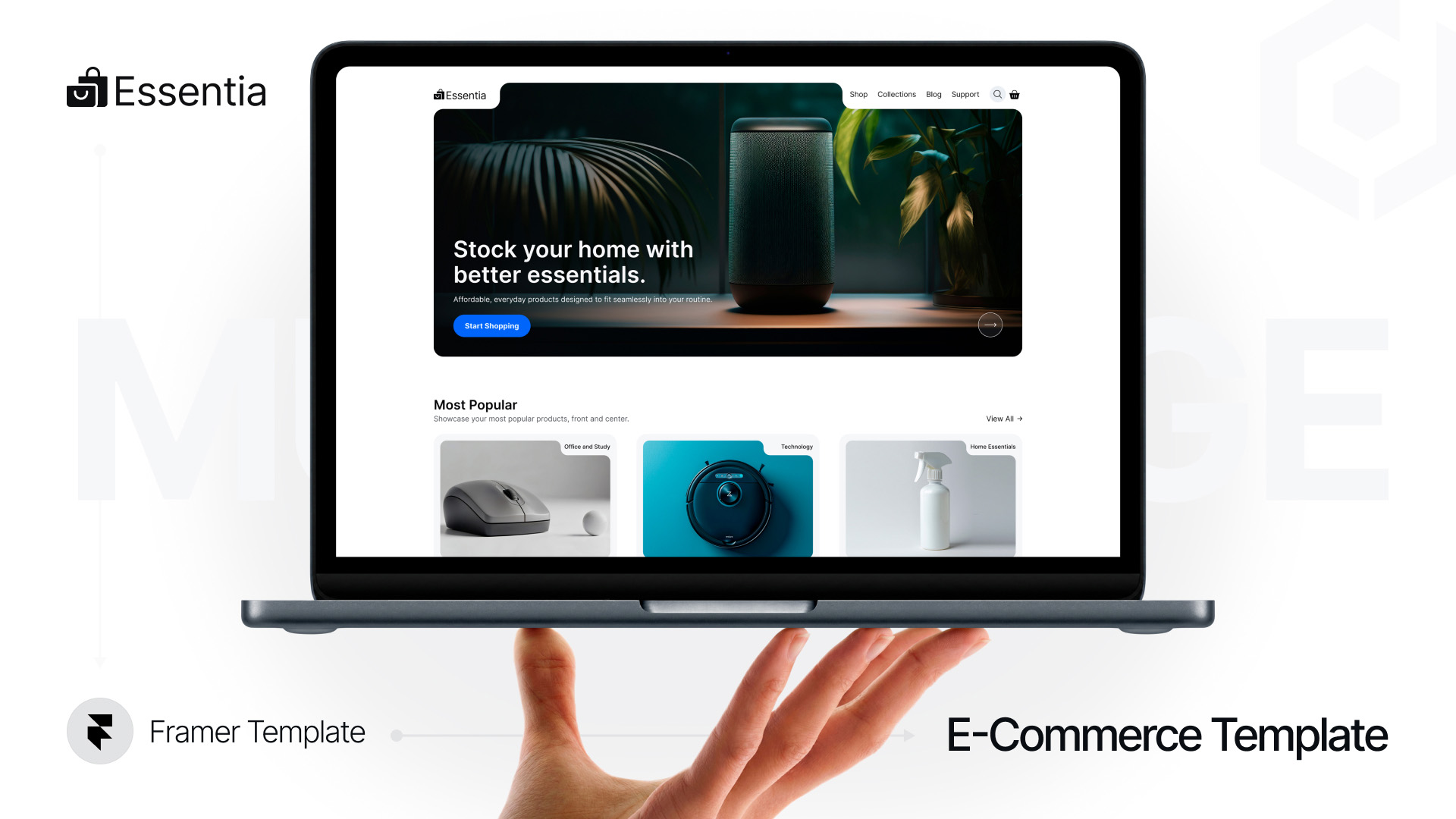
Essentia – E-commerce Framer Template
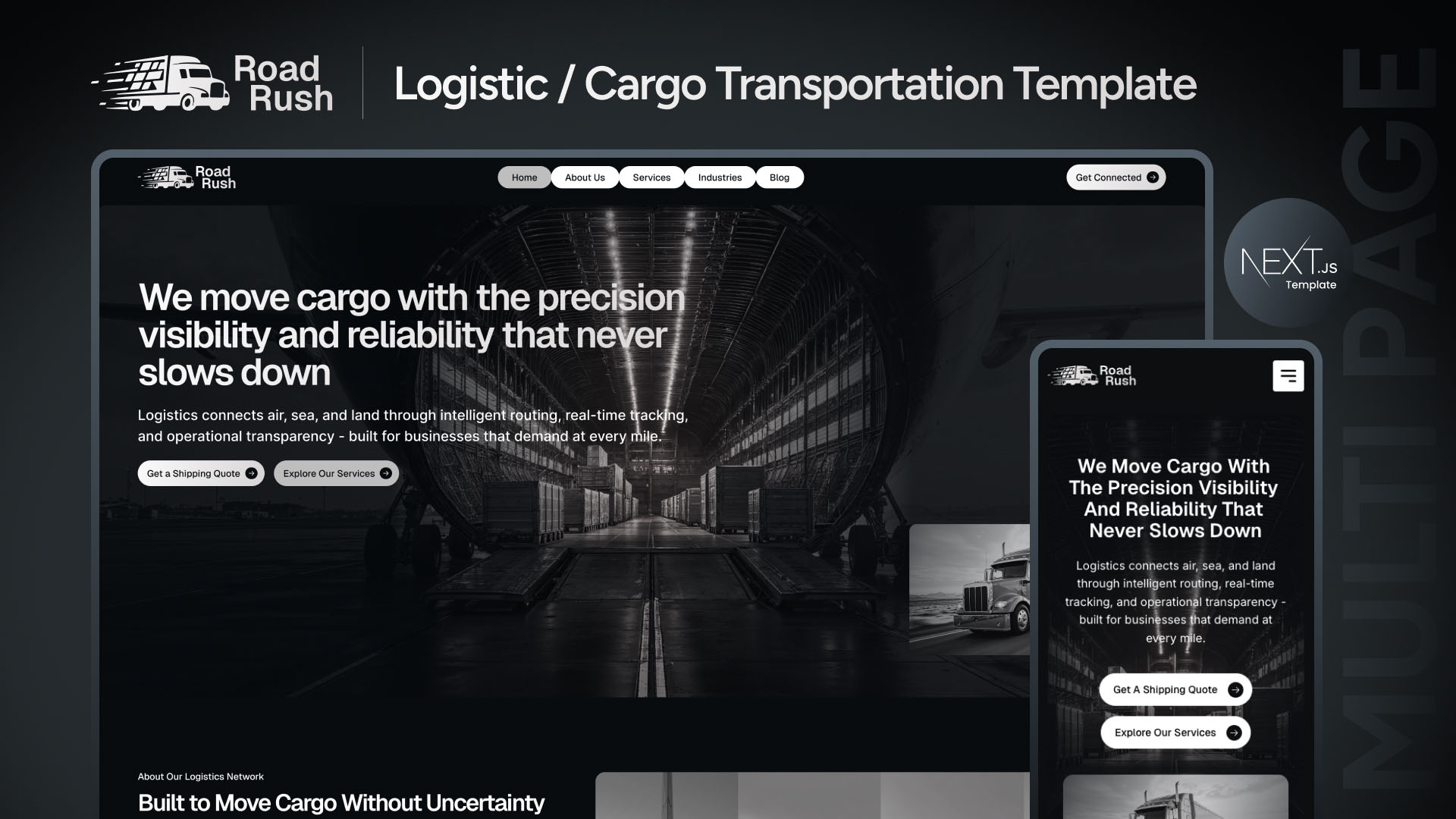
Roadrush – Logistics Next.js Template
What no comparison can decide for you
The right choice depends on your stack, your budget horizon, and whether you value selection or consistency more. If you’re on Webflow and staying there, use Webflow’s templates. If you need something niche and obscure, ThemeForest’s scale wins. And, if you want owned, fast, multi-framework code held to one bar, that’s the gap we built DesignToCodes to fill.
Frequently asked questions
Is DesignToCodes better than ThemeForest?
Not universally — it depends on what you need. ThemeForest offers far more selection and the lowest entry prices; DesignToCodes offers consistent quality, multi-framework hand-coded templates, and no platform lock-in. ThemeForest wins on variety; DesignToCodes wins on consistency and performance.
Do Webflow templates work outside Webflow?
Generally no. Webflow templates are built for the Webflow platform and depend on it for editing and hosting, which means an ongoing subscription. ThemeForest and DesignToCodes templates can be hosted anywhere.
Which is cheapest over time?
For a long-lived site, a one-time-purchase hand-coded template (DesignToCodes or many ThemeForest items) is usually cheaper than a Webflow template, because Webflow requires an ongoing plan to keep the site running — unless you already pay for Webflow anyway.
How do I judge template quality on any marketplace?
Run the live demo through PageSpeed Insights, check accessibility with keyboard navigation, read the license, and look at the last update date. On author-based marketplaces, also check reviews and the author’s track record.
Want hand-coded, owned, multi-framework templates? Browse the DesignToCodes categories — and run any of them through the quality checks above.