
What does a cybersecurity portfolio need to actually land interviews?
A cybersecurity portfolio that lands interviews shows evidence, not adjectives: documented labs and CTF write-ups, a vulnerability disclosure or two, relevant certifications, and tooling you actually use — presented on a fast, professional site. Hiring managers in security are skeptical by trade, so proof and clarity beat flashy design every time. Below are the sections to include, what to show in each, and nine example patterns to model.
Why a security portfolio is different
Security hiring managers screen for credibility and judgment. They want to see that you can find and explain a vulnerability, document your process, and communicate risk clearly. A generic developer portfolio doesn’t signal this — a security portfolio that leads with real write-ups and responsible-disclosure work does.
The sections every cybersecurity portfolio needs
- Headline + specialty. “Penetration tester focused on web app security” beats “cybersecurity enthusiast.” Name your lane: red team, blue team, AppSec, GRC, SOC.
- Lab & CTF write-ups. The core of the portfolio. Show your methodology — recon, exploitation, remediation — on platforms like TryHackMe, HackTheBox, or PortSwigger labs.
- Vulnerability disclosures. Even one responsibly-disclosed bug (with permission/CVE) is powerful proof. Document the impact and the fix.
- Certifications. CompTIA Security+, eJPT, OSCP, CEH — list what you hold and what you’re pursuing.
- Tools & skills, grouped. Burp Suite, Nmap, Wireshark, Metasploit, Python — organized by category.
- Blog/notes. A few technical posts prove that you can communicate, which security roles require.
- Contact + resume. Professional email, LinkedIn, and a clean PDF.
Nine example patterns to model
| # | Pattern | Best for |
|---|---|---|
| 1 | Lab-write-up-first (TryHackMe/HTB log front and center) | Entry-level red team |
| 2 | CVE/disclosure showcase | Bug bounty hunters |
| 3 | Tooling + automation (your own scripts/repos) | Security engineers |
| 4 | Cert + roadmap (clear learning path) | Career changers |
| 5 | Blue-team/SOC dashboard style | Defensive roles |
| 6 | GRC/compliance-document focus | Governance roles |
| 7 | Research/write-up blog hybrid | Threat researchers |
| 8 | Minimal terminal/hacker aesthetic done tastefully | Brand personality |
| 9 | Template-based, fast, and polished | Anyone short on time |
How to write a security write-up that impresses
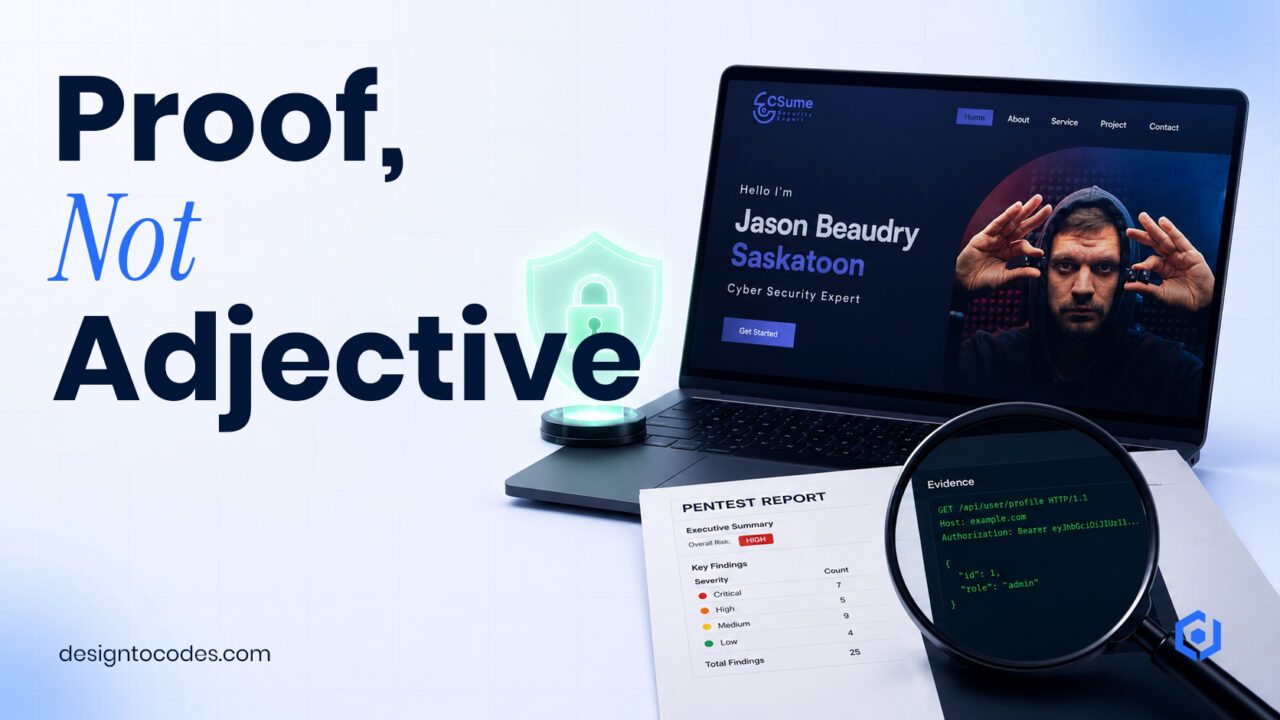
Structure each lab or finding the way a real report reads: Scope (what you were testing), Recon (how you mapped it), Finding (the vulnerability and how you exploited it), Impact (what it would let an attacker do), Remediation (the fix). This mirrors a professional pentest report and signals you can do the actual job — not just run tools.
Design & performance still matter
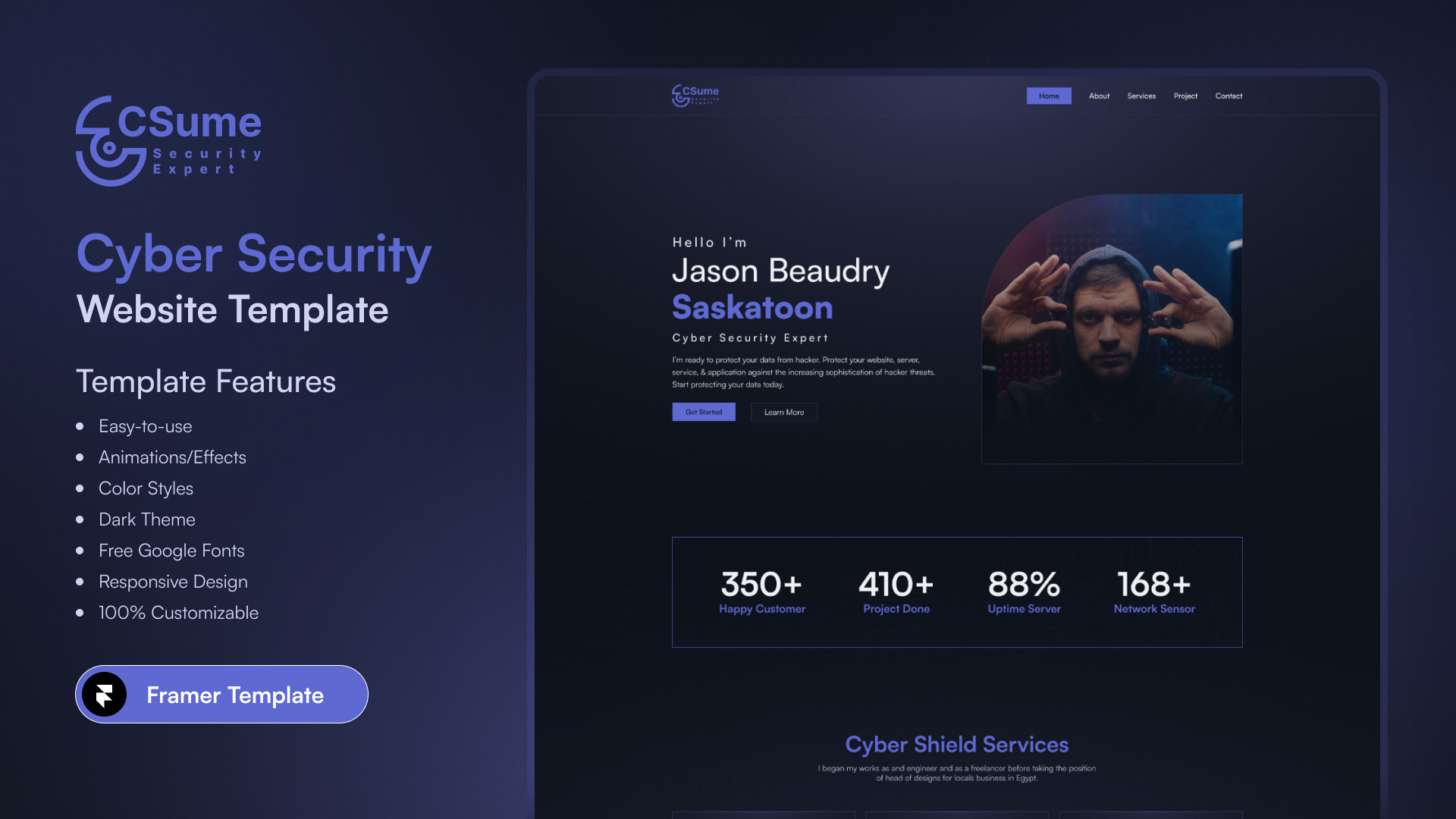
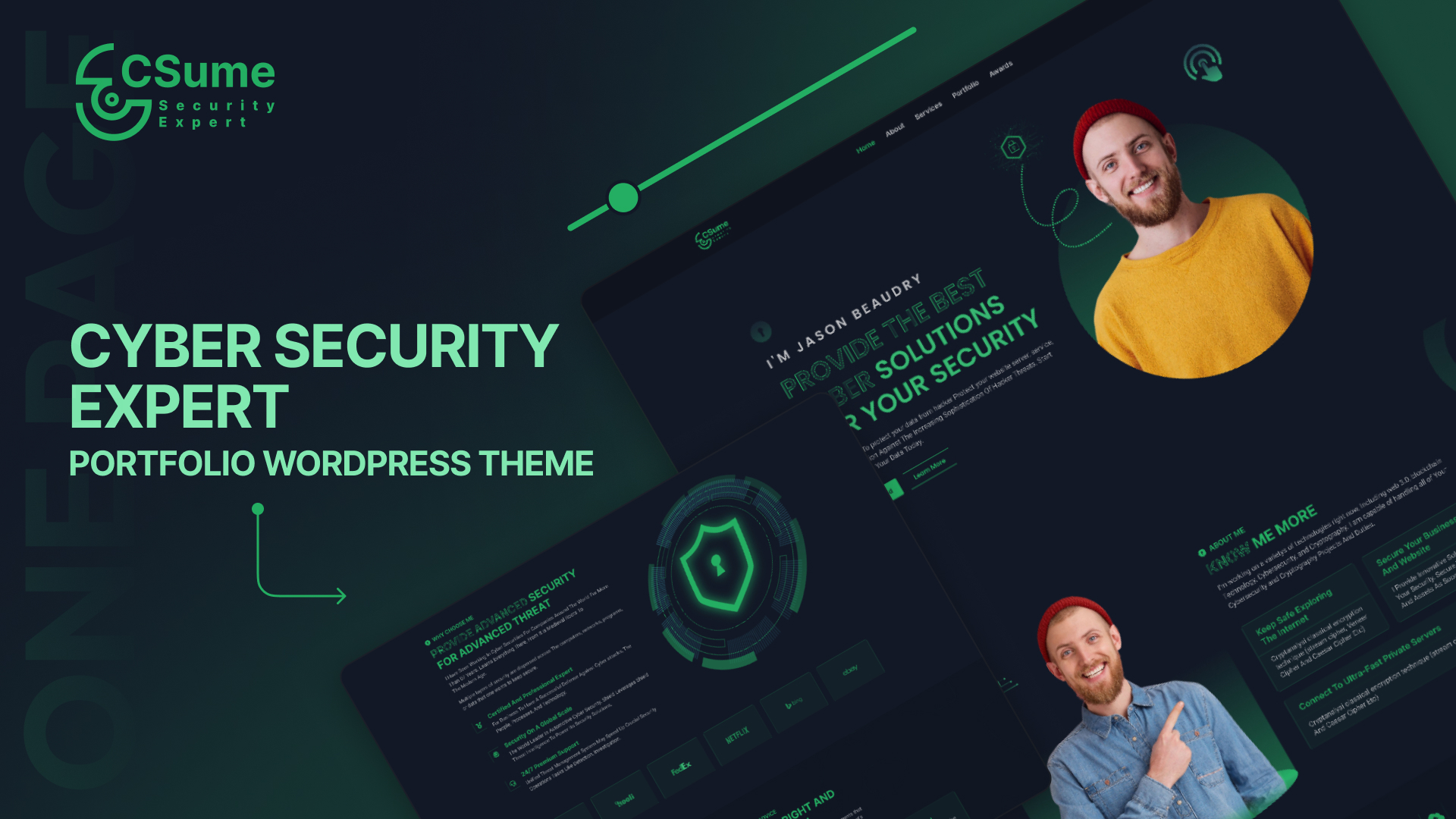
A security portfolio that loads slowly or looks broken undercuts your credibility. Keep it fast, accessible, and clean. The “hacker terminal” aesthetic is fine in moderation, but readability wins — a recruiter on mobile needs to scan your specialty and certs in seconds. If you’d rather start from a base purpose-built for this, our Csume cybersecurity portfolio template is designed exactly for security professionals and ranks among our highest-intent products.
The mistakes that cost security candidates
- Claiming skills with no write-up or repo to back them.
- Posting “hacks” of systems you didn’t have permission to test — a red flag, not a green one.
- No clear specialty, so the reviewer can’t place you.
- Walls of certifications with no demonstrated application.
Csume | Professional Cyber Security Theme for Elementor Pro

Download Now
Csume v3 – Framer Cyber Security Template – Expert Portfolio
Download Now
Csume V2 – Cyber Security Expert Portfolio WordPress Theme
Download Now
Frequently asked questions
What should a cybersecurity portfolio include?
Lab and CTF write-ups, any responsible vulnerability disclosures, certifications, the tools you use, a couple of technical blog posts, and clear contact details — all on a fast, professional site.
Do I need certifications to have a cybersecurity portfolio?
They help, but aren’t mandatory. Documented hands-on work — CTF write-ups, home-lab projects, and disclosures — can carry an entry-level portfolio even before you hold certs.
Is it legal to show hacking projects in my portfolio?
Only on systems you’re authorized to test: dedicated practice platforms (TryHackMe, HackTheBox), your own lab, or targets under a bug-bounty/disclosure program. Showing unauthorized access is a serious red flag.
What’s the best way to stand out in a security portfolio?
A clear specialty plus one detailed, well-written finding — scope, exploitation, impact, and remediation. That demonstrates real-world judgment, which matters more to security employers than design.
Build it on the right foundation — the CSUMEcybersecurity portfolio template is built for security pros and ships production-ready.