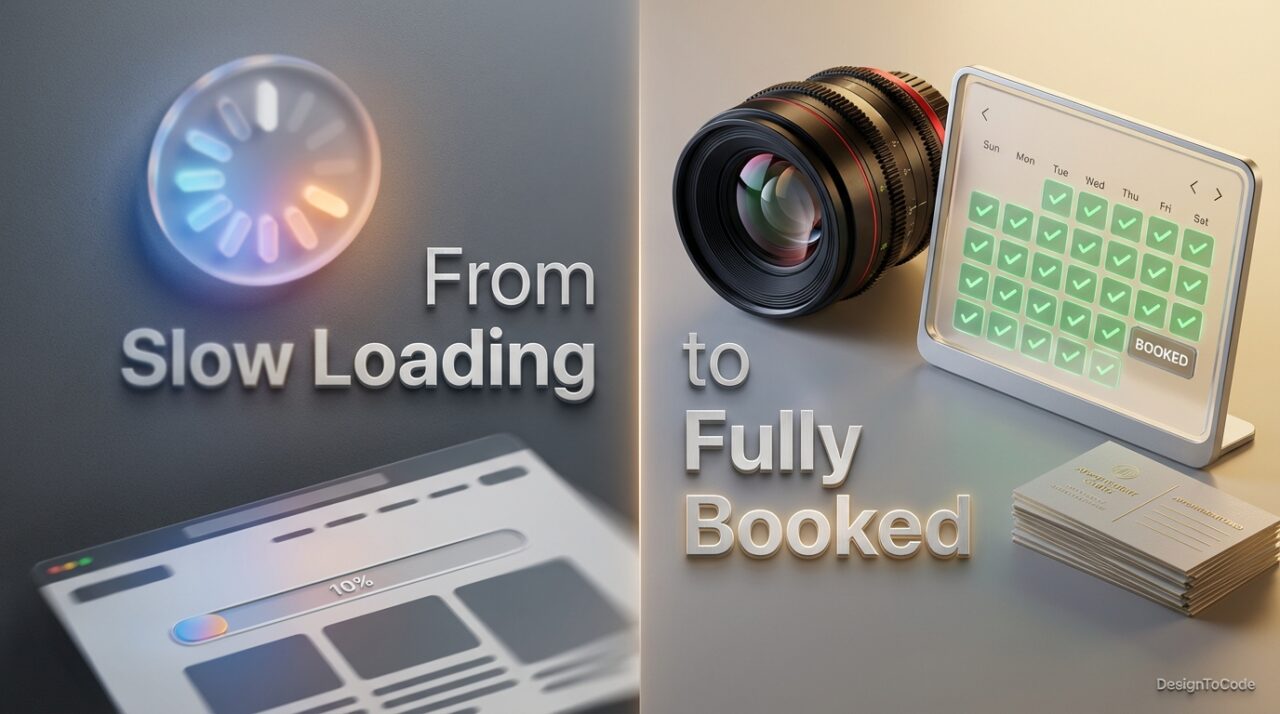
In the high-stakes world of editorial and wedding photography, your digital presence is not just a portfolio—it is your storefront, your handshake, and your closing argument all rolled into one. For years, the industry standard relied on clunky, plugin-heavy content management systems. But as the digital landscape shifts toward core web vitals and mobile-first indexing, the definition of the Best Website for Photographers has changed dramatically.
This is the story of Elena, a high-end editorial wedding photographer who realized her legacy website builder was costing her clients, and how switching to a modern, high-performance Photographer Website Template—specifically Fotograaf—revolutionized her business workflow and SEO rankings.
The Problem: The “Spinning Wheel” of Legacy Builders
Elena’s work is breathtaking. Her aesthetic is minimalist, emotive, and editorial. However, her digital home told a different story. Like many in her field, she started with a popular drag-and-drop builder. It was easy to set up, but as her portfolio grew, the site buckled under the weight of high-resolution imagery.
Her previous Wedding Photography Website Template was plagued by three critical issues:
- Poor Performance: Her Lighthouse speed score hovered around 45/100. High-resolution galleries took upwards of 6 seconds to load on mobile data. In an era where attention spans are measured in milliseconds, she was losing prospective brides before they even saw her hero image.
- Generic Design: Despite hours of customization, the site still felt “templated.” It lacked the bespoke, fluid interactivity that luxury clients expect. It was a Photography Portfolio Template that looked like everyone else’s.
- SEO Stagnation: Despite writing blogs and tagging images, her site wasn’t climbing the SERPs (Search Engine Results Pages). The heavy code bloat of the legacy platform was signaling to Google that her site offered a poor user experience.
“I felt like my website was a Honda Civic trying to sell a Ferrari experience,” Elena admitted. “My prices reflected luxury, but my website performance reflected amateur hour.”
The Pivot: Searching for a High-Performance Solution
Elena didn’t need another WordPress theme stuffed with unnecessary plugins. She needed a Modern Photography Website architecture. So she began researching the technologies used by top design agencies and discovered the power of the JAMstack (Javascript, APIs, and Markup), specifically Next.js and Tailwind CSS.
She realized that the Best Website for Photographers in the modern era isn’t built on a database-heavy CMS that constructs pages on the fly. It is built on static site generation where pages are pre-rendered for instant delivery. She needed a Next.js Portfolio Template that combined the ease of use of a template with the raw power of custom engineering.
This led her to Fotograaf, a specialized Photographer Website Template designed for speed, SEO, and visual hierarchy.
The Solution: Implementing Fotograaf
The transition to Fotograaf was a paradigm shift. Unlike the “what you see is what you get” chaos of drag-and-drop builders, Fotograaf provided a structured, semantic environment built with Tailwind CSS. Here is how this specific Photographer Website Template addressed her pain points.
1. Speed as a Feature
The most immediate change was speed. Because Fotograaf is a High Performance Portfolio Website solution, it utilizes Next.js image optimization. Instead of loading a 5MB image for a user on a mobile phone, the template automatically serves a correctly sized, modern format (like AVIF or WebP) image.
Elena’s Lighthouse score jumped from 45 to 98 overnight. This isn’t just a vanity metric; Google’s Core Web Vitals update explicitly prioritizes page experience. By using a Fast Loading Photography Website architecture, Elena was suddenly playing by Google’s new rules.
2. Clean, Editorial Design
Luxury is defined by what you remove, not what you add. The Clean Photography Template design of Fotograaf allowed Elena’s images to breathe. The typography was crisp, the whitespace was intentional, and the animations were buttery smooth—thanks to the lightweight nature of a Tailwind CSS Portfolio.
The layout didn’t fight for attention; it acted as a gallery wall. For an Editorial Photography Template, this restraint is crucial. It signaled to art directors and high-budget planners that Elena understood modern aesthetics.
3. SEO Architecture
Most photographers don’t realize that a Responsive Photography Portfolio needs semantic HTML to rank well. Legacy builders often wrap text in layers of meaningless `div` tags. Fotograaf provided an SEO Optimized Photography Portfolio structure out of the box. Headers were proper `h1` and `h2` tags, images had accessible alt-text structures, and the metadata was dynamically generated for social sharing.
The Results: “After” the Switch
Six months after migrating her portfolio to the Fotograaf Photographer Website Template, the data spoke for itself.
- Inquiry Rate Increased by 40%: The correlation between load time and conversion is well-documented. By removing the friction of a slow site, more visitors stayed long enough to reach the “Contact” page.
- Bounce Rate Dropped by 35%: The Responsive Photography Portfolio design ensured that mobile users (who make up 60% of her traffic) had an experience just as immersive as desktop users.
- SEO Rankings Improved: Elena moved from Page 3 to Page 1 for her primary local keywords. Google rewarded the technical performance of the Next.js Portfolio Template structure.
“The difference wasn’t just in the numbers,” Elena noted. “The clients I started attracting were different. They were higher-budget, more design-savvy. They appreciated the fluidity of the site. It felt like a high-end magazine, not a blog.”
Why the Tech Stack Matters for Photographers
You might be asking, “I am a photographer, not a developer. Why should I care about Next.js or Tailwind?”
The reality is that the market is oversaturated. A beautiful image is no longer enough; the delivery of that image matters. When you choose a Photographer Website Template built on modern tech, you are future-proofing your business.
A Tailwind CSS Portfolio ensures that your site is styling-efficient. It doesn’t load massive stylesheets for features you aren’t using. A Next.js Portfolio Template ensures that navigating between pages feels instant because the browser pre-fetches the link before the user even clicks it.
Moreover, this creates an “app-like” feel that legacy platforms simply cannot replicate. For a Wedding Photography Website Template, where you are trying to evoke emotion and luxury, this user experience (UX) is part of your brand value.
How to Choose the Right Photographer Website Template
If you are looking to replicate Elena’s success, you need to look beyond the demo images. Here is a checklist for selecting a Photographer Website Template that will actually grow your business:
- Check the LCP (Largest Contentful Paint): Run the template demo through Google PageSpeed Insights. If the mobile score is below 80, walk away. You need a Fast Loading Photography Website.
- Mobile Responsiveness: Does the menu work flawlessly on a phone? Do portrait images crop strangely? A truly Responsive Photography Portfolio adapts fluidly to any viewport.
- Code Quality: Is the template built on modern frameworks like Next.js or Remix? Or is it relying on outdated PHP structures? The Best Website for Photographers today utilizes the latest in web development.
- Asset Optimization: Does the template handle image optimization automatically? As a photographer, you shouldn’t have to manually resize every image for the web. An SEO Optimized Photography Portfolio template handles this for you.
Your Portfolio Deserves High Performance
Elena’s journey from a sluggish, generic site to a high-speed, conversion-driving machine illustrates a vital lesson for the industry. Your work deserves a platform that elevates it, not one that holds it back.
The era of the heavy, slow-loading portfolio is over. By embracing a modern Photographer Website Template like Fotograaf, you aren’t just updating your website; you are upgrading your entire client experience. Whether you need an Editorial Photography Template or a robust Wedding Photography Website Template, the underlying technology is the foundation of your digital success.
Don’t let a slow website be the reason a dream client clicks the “Back” button. Invest in performance, invest in design, and watch your business transform.